Make state explicit
Define what the customer, appointment, order, task, and financial workflow can become—and which transitions are valid.
How I translate messy customer journeys into product and engineering contracts that are measurable, reliable, and safe to operate.
01 · The boundary
My work sat where journey metrics, operating workflows, product behavior, and backend contracts meet. I needed enough technical depth to define states and edge cases, challenge system behavior, instrument outcomes, and make trade-offs with engineering.
Define what the customer, appointment, order, task, and financial workflow can become—and which transitions are valid.
Align on actors, inputs, outputs, errors, duplicate behavior, side effects, and instrumentation before a flow is built.
Connect backend outcomes to customer funnels, service quality, workload, revenue, cost, and operating alerts.
02 · Architecture
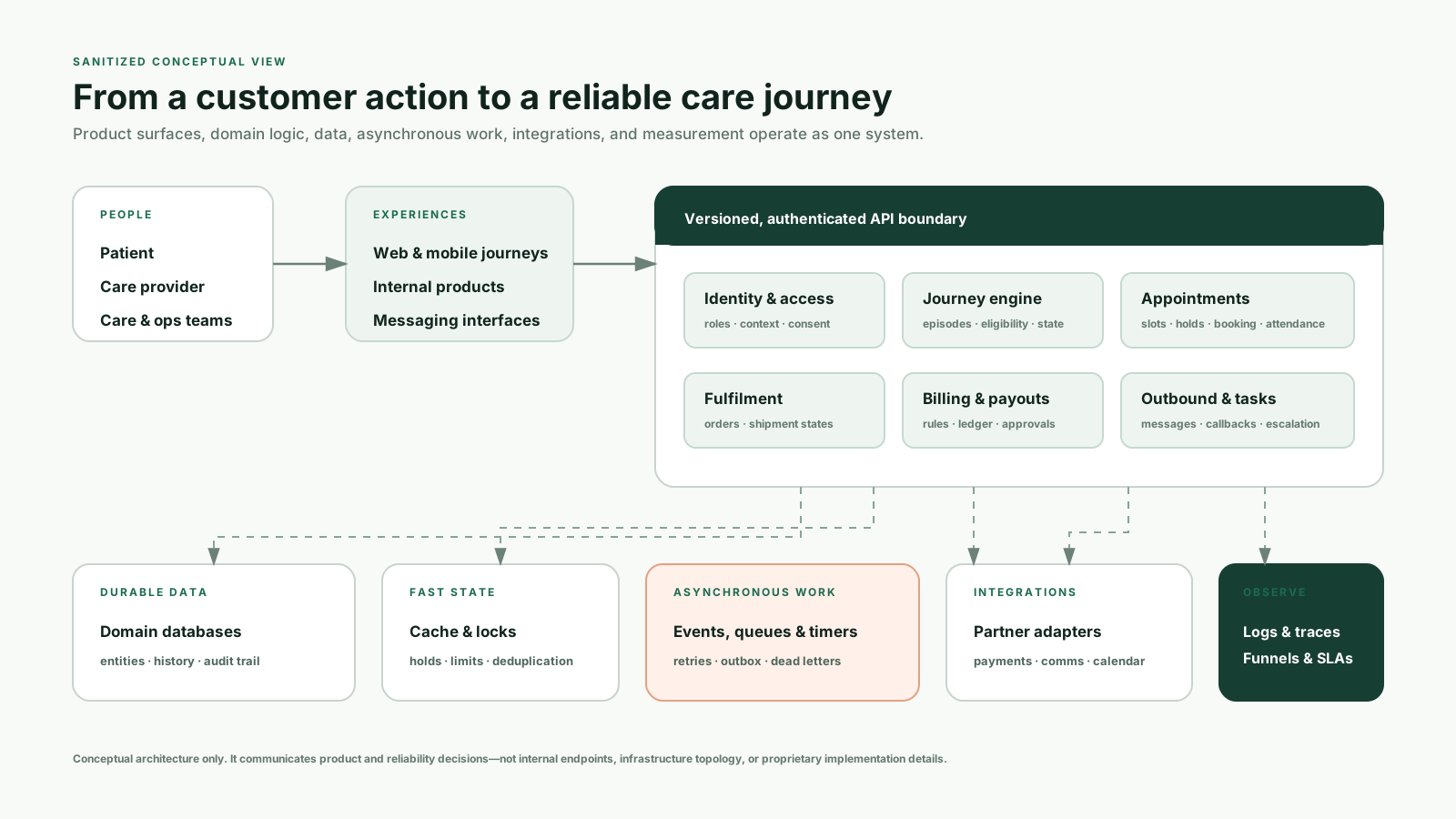
A useful architecture view shows responsibilities and handoffs. It does not expose proprietary endpoints or infrastructure.
The experience layer stays coherent because domain modules, durable data, asynchronous work, partner adapters, and observability are designed together.
Patient, provider, care, and operations surfaces share the same underlying journey state instead of creating channel-specific truth.
Versioned APIs validate identity, role, input, current state, and expected outcome before a command reaches domain logic.
Journey, appointment, fulfilment, payout, outbound, and task modules own their rules and expose deliberate handoffs.
Durable data, caches, locks, events, queues, scheduled work, audit history, and traces keep workflows recoverable.
03 · API design
For a booking, chatbot escalation, payout approval, or fulfilment update, the endpoint name is the smallest part of the design. The meaningful work is making the behavior unambiguous.
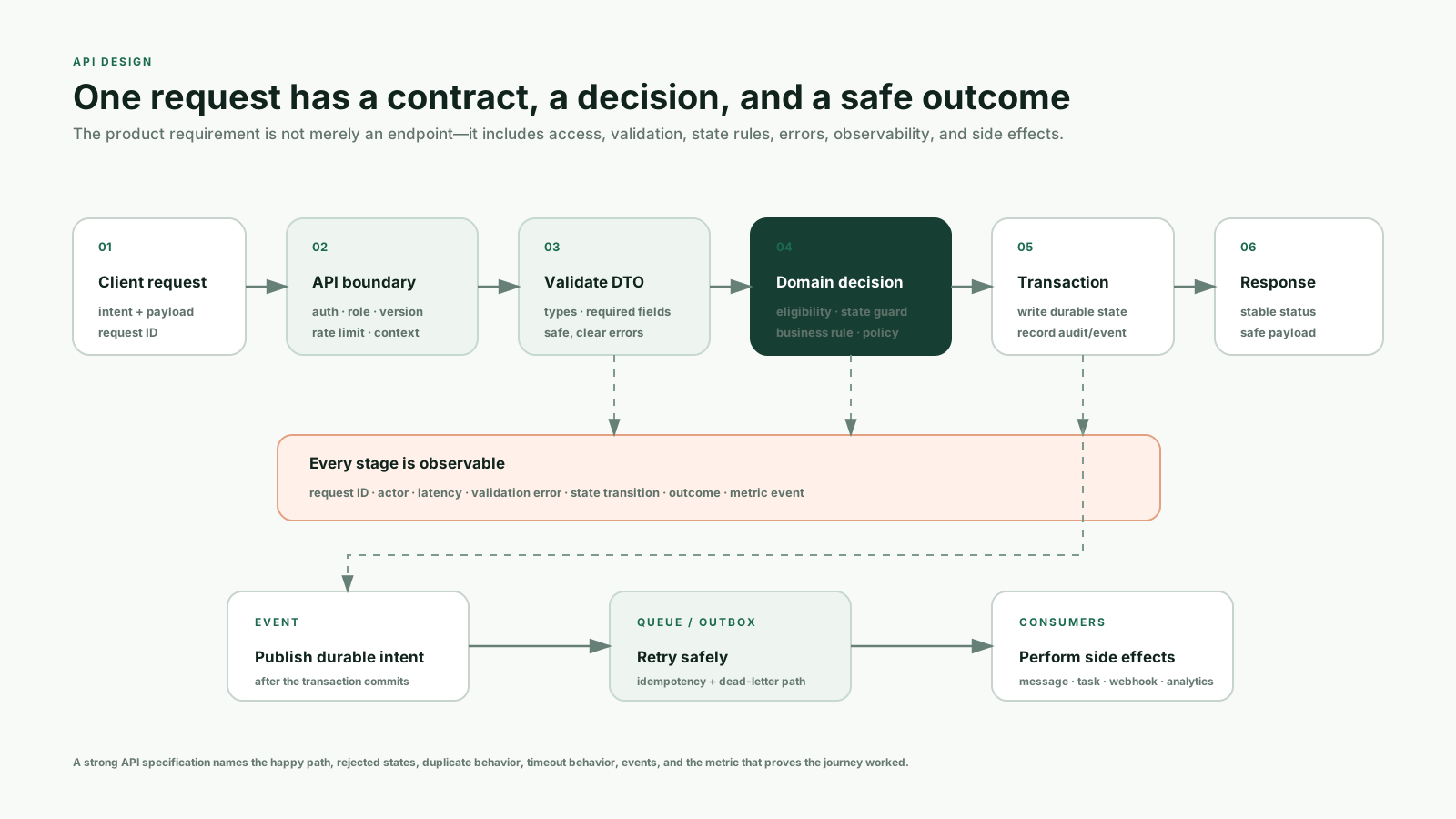
Commit the core business outcome once, return a stable response, then execute messages, tasks, webhooks, and analytics through durable asynchronous paths.
Authentication identifies the actor; roles, context, and consent determine whether that actor may perform this action.
Typed request objects define required fields, formats, safe defaults, and specific validation errors.
Domain rules check eligibility and current state—for example, whether a slot is still available or a payout is approvable.
An idempotency key, stable business identifier, or deduplication rule prevents duplicate bookings, messages, and ledger entries.
The contract names synchronous output plus the events, timers, tasks, webhooks, and analytics emitted after a successful write.
Expected errors, timeouts, retries, dead-letter handling, operator visibility, and safe replay are designed before launch.
04 · Events & state
Current state answers “where is this journey now?” Events answer “what happened?” Scheduled events answer “what should happen later?” Keeping these ideas separate makes the flow debuggable.
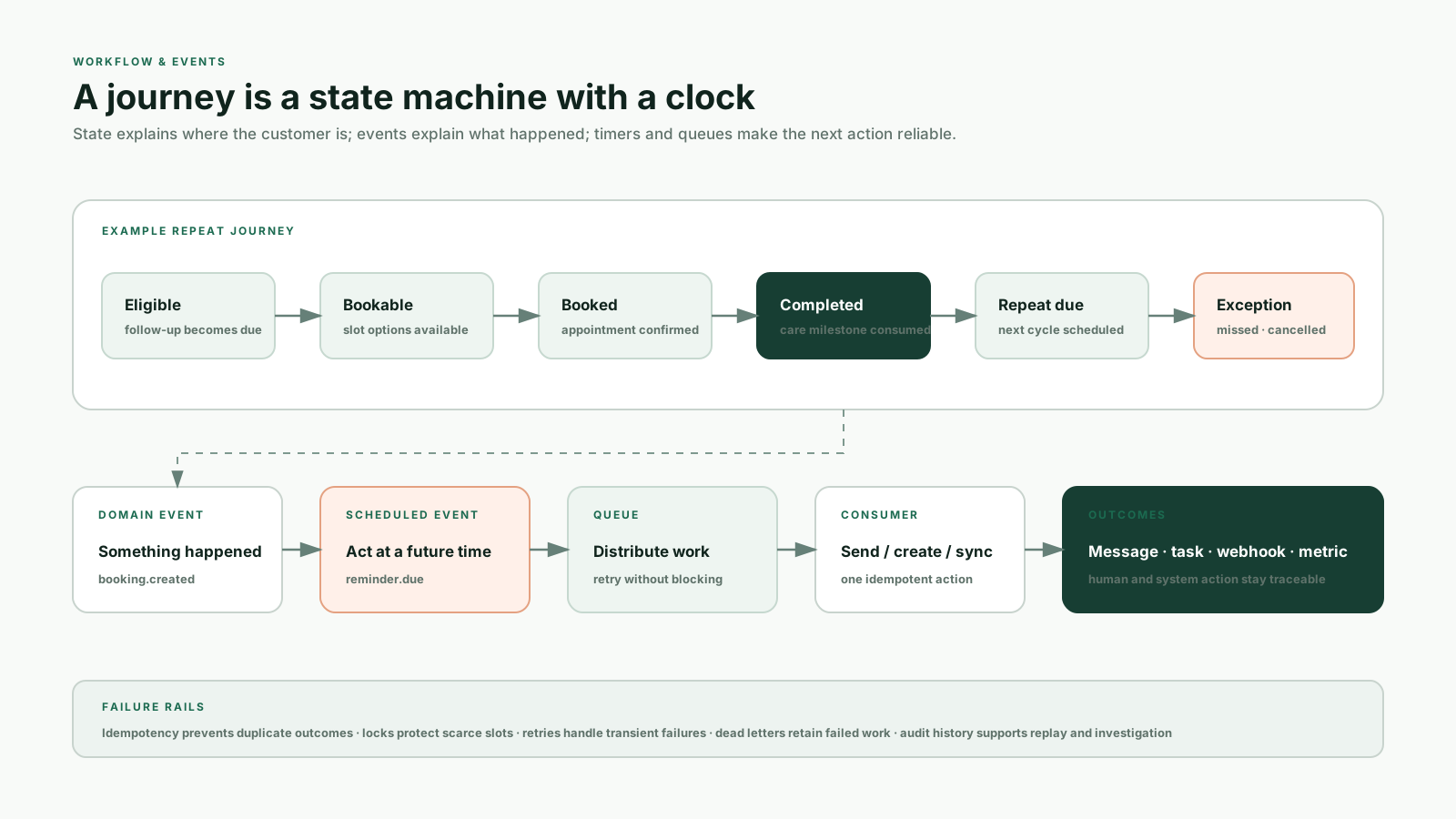
A transition can update customer state immediately and schedule future work without forcing the user-facing request to wait for every side effect.
05 · Schema design
The schema should make the most important product questions easy to answer without sacrificing operational or financial auditability.
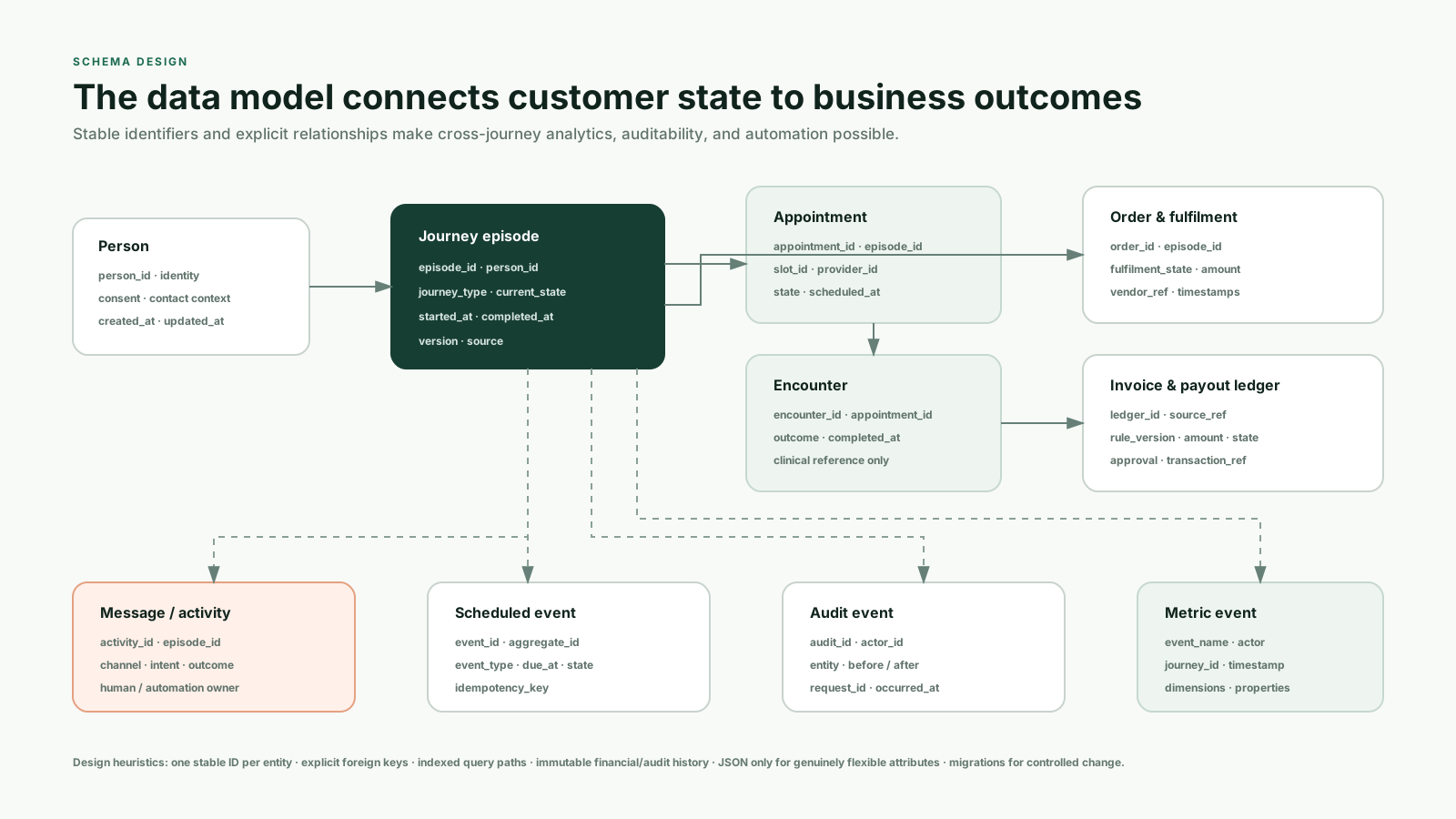
Stable relationships let teams connect customer intent, operational work, delivery, financial outcomes, messages, and analytics without relying on a single overloaded table.
Use one stable identifier for every core entity and preserve the source reference from partner systems.
Model relationships explicitly so a journey can be traced from person to episode, appointment, order, invoice, payout, message, and outcome.
Keep current state easy to query, while recording the event or audit history needed to explain how it changed.
Index the paths used by live products and operating dashboards; do not optimize only for storage neatness.
Keep financial and audit records append-safe. Corrections should create traceable adjustments instead of silently rewriting history.
Use flexible JSON attributes for genuinely variable metadata—not as a substitute for stable, queryable product concepts.
06 · Reliability
Reliability becomes a product concern when a duplicate task wastes an agent’s time, a lost message breaks treatment continuity, or a repeated ledger write moves money twice.
Validate state, lock scarce resources, use stable identifiers, make consumers idempotent, and release through feature flags.
Retry transient failures, route exhausted work to a dead-letter queue, preserve context, and provide safe replay or manual action.
Connect logs, traces, queue depth, error classes, journey funnels, service SLAs, and business guardrails to one incident picture.
07 · My contribution
Clear boundaries make the case study more credible and show how I collaborate in a production team.
Defined customer states, entry and exit criteria, edge cases, ownership, and the metric attached to each transition.
Implemented domain services, persistence, concurrency controls, migrations, tests, and runtime deployment.
Specified actors, payload needs, success and error behavior, duplicate handling, downstream events, and partner handoffs.
Selected implementation patterns, wrote controllers and adapters, handled authentication, and maintained service contracts.
Prioritized failure modes, manual fallbacks, alerts, support visibility, feature flags, and business guardrails.
Built queues, locks, retries, dead-letter paths, traces, dashboards, and operational tooling.
All diagrams are original, sanitized conceptual representations. No patient data, source code, internal endpoint names, credentials, or proprietary infrastructure details are included.